OVERVIEW
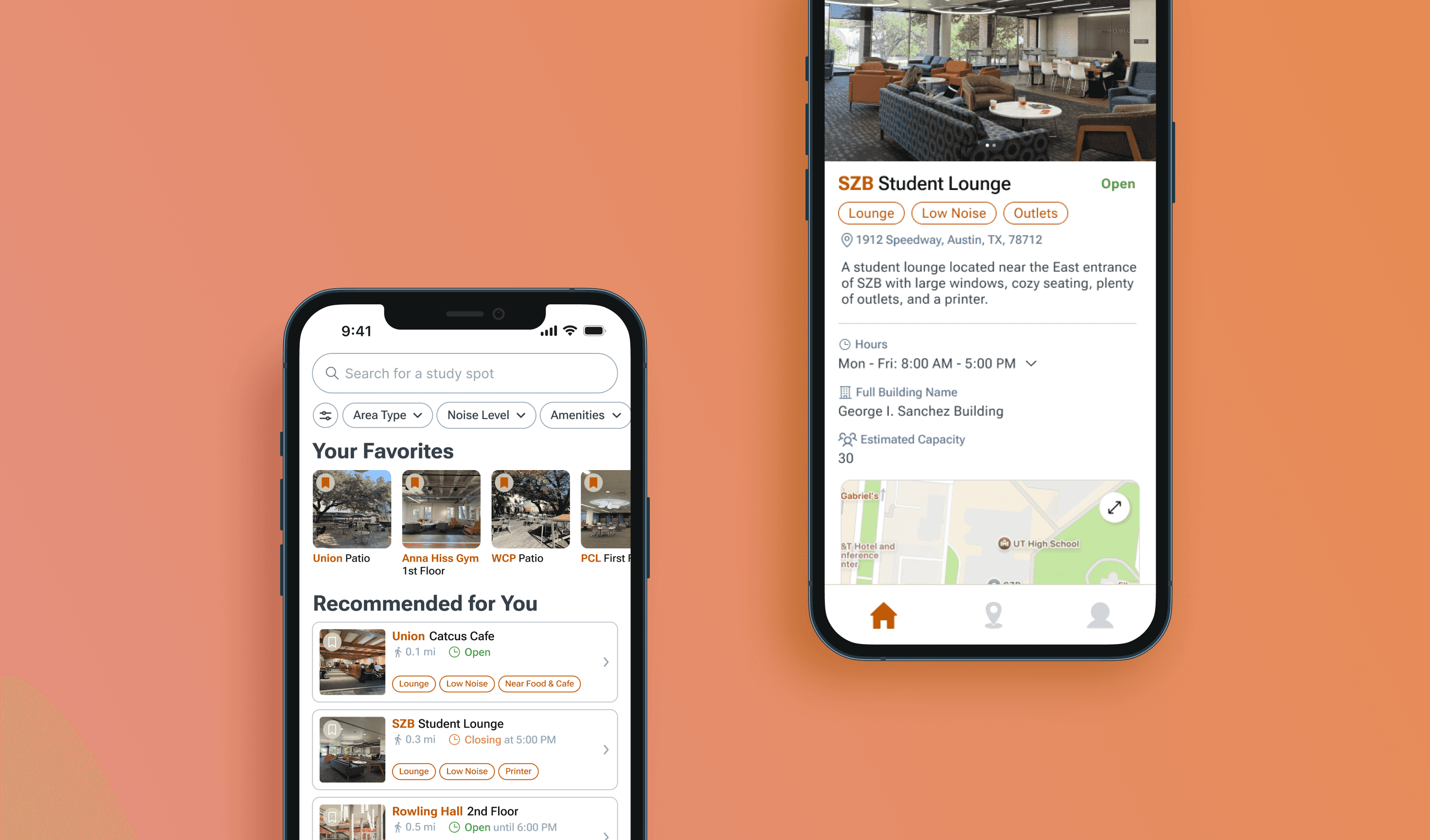
Longhorn Studies - Helping UT students discover study spots
ROLE
Product Design Lead
TIMELINE
Sept 2025 - Dec 2025
TEAM
3 Designers
3 Developers
2 Product Members
SKILLS
Product Design
User Research
PROBLEM
Campus study spot information is scattered
Through 10+ user interviews with UT Austin students, I uncovered the following key insights:

Difficulty matching personal preferences
Many needs for amenities and environment make finding a study spot difficult.
"I need to have whiteboards, plugs and it needs to be quiet."

Information gaps about study spaces
Key study space details are often unavailable or hard to find in one place.
"I end up guessing and hoping a spot works."

Desire to track past study spots
Students want to remember the spaces that work best for them.
"If I could mark my best study spots, I'd spend less time searching."
The challenge: How can I help UT Austin students find on campus study spots tailored to their preferences?
HIGH-LEVEL GOALS THAT SHAPED MY DESIGN
Enable quick study spot discovery based on personal preferences
Centralize relevant study spot information
THE PROCESS
Behind the Scenes of Longhorn Studies
Competitive Analysis: Learning from other study spot platforms
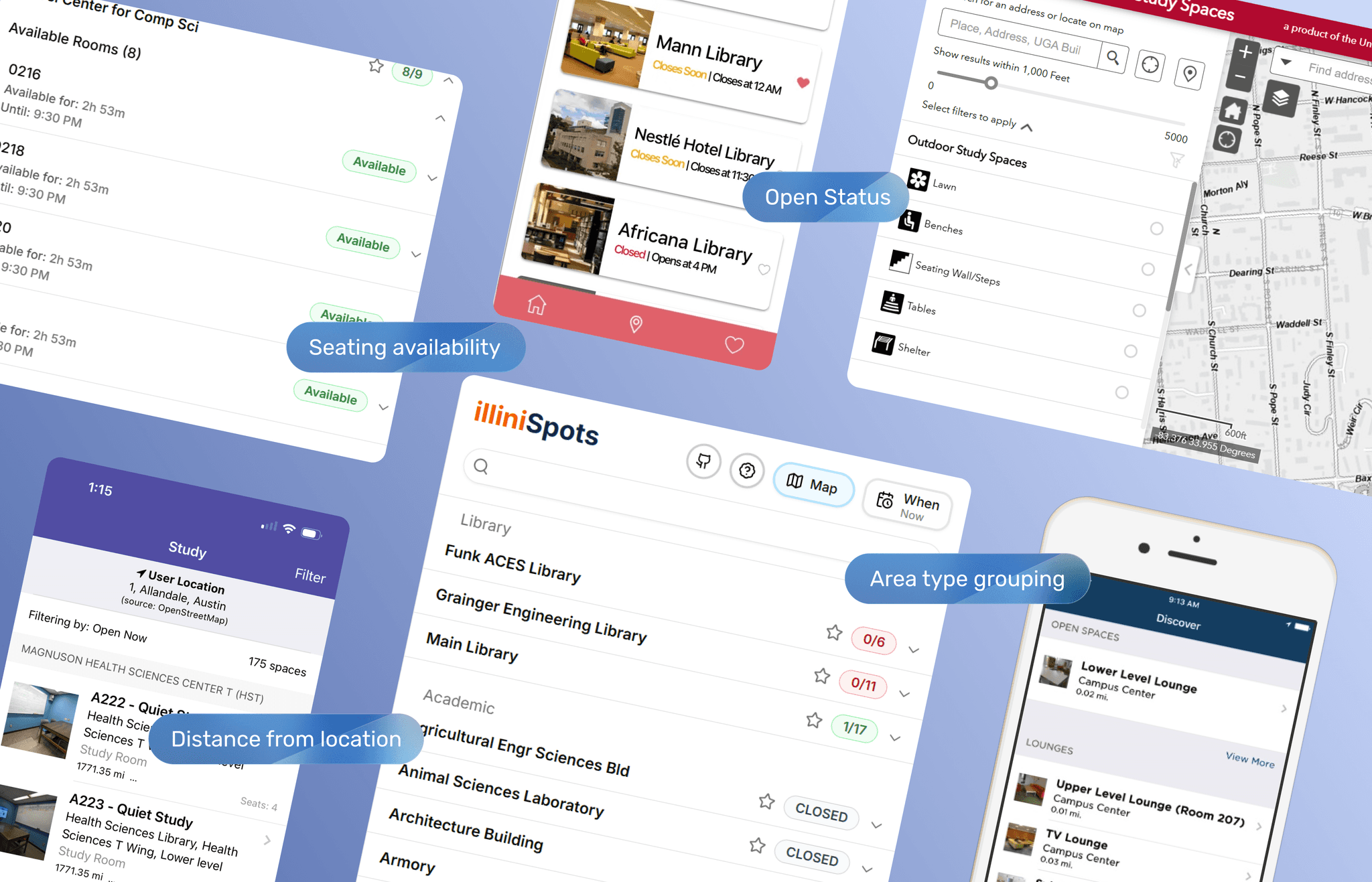
Through a competitive analysis of study spot platforms, I drew inspiration from their strengths and gaps. While some platforms struggled to surface relevant spots with environment and amenity information, others successfully displayed the right amount of information at a glance.
Early prototypes
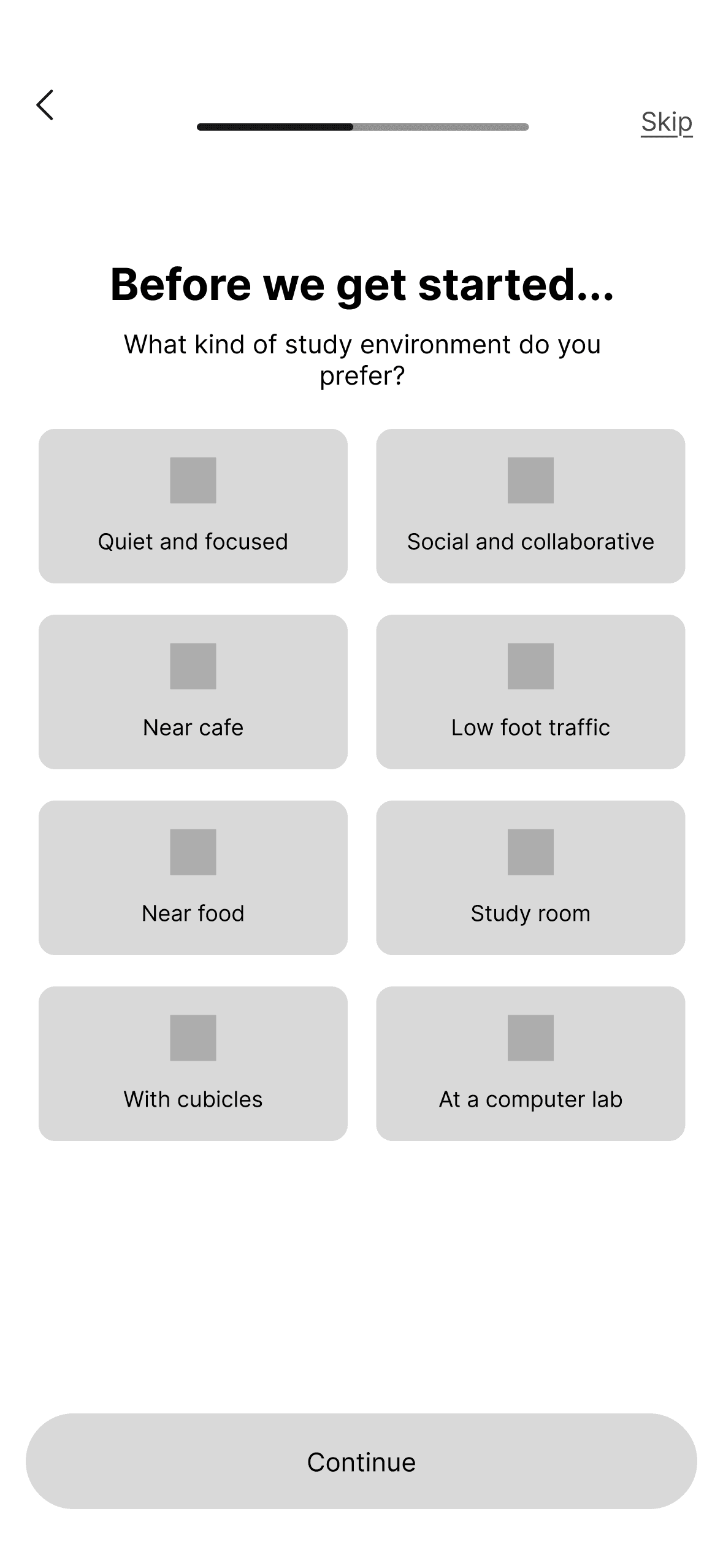
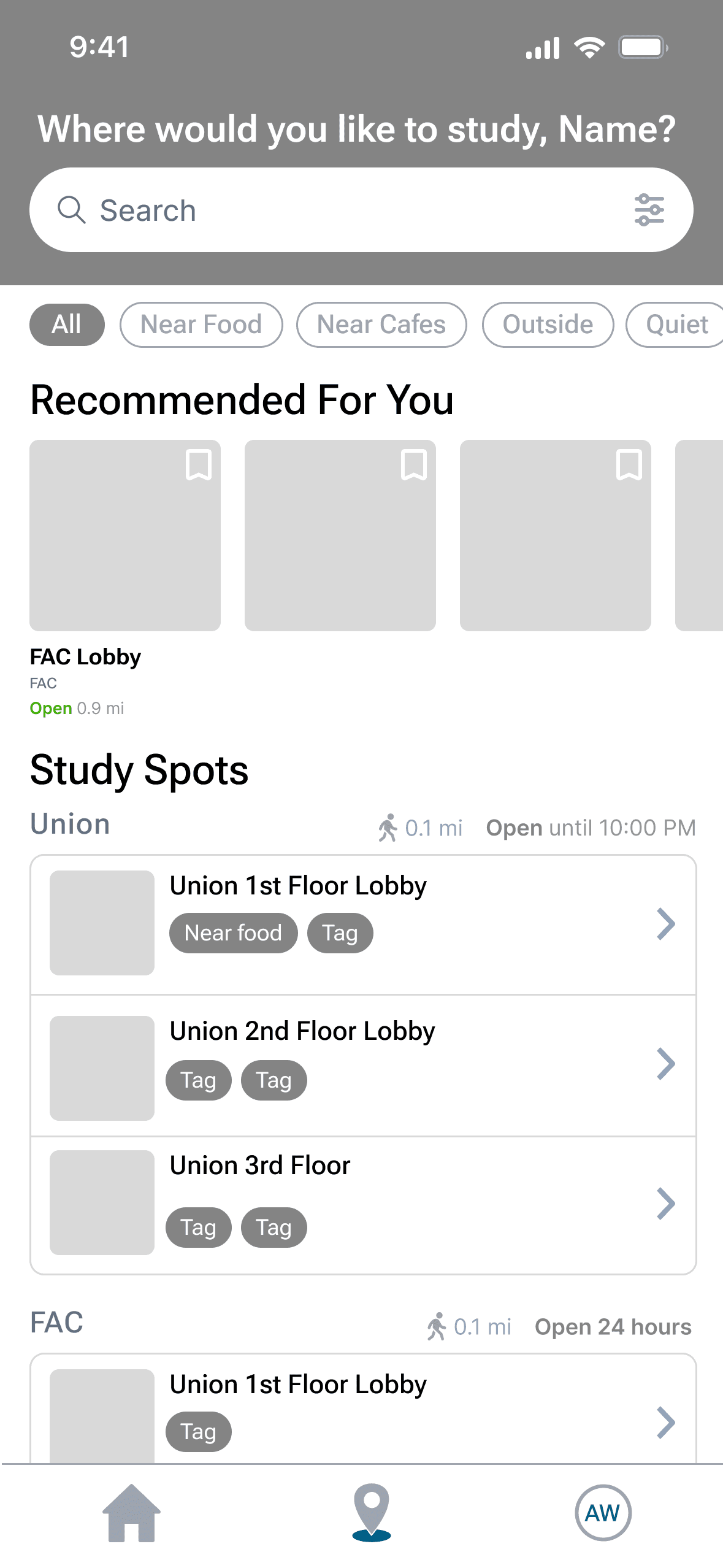
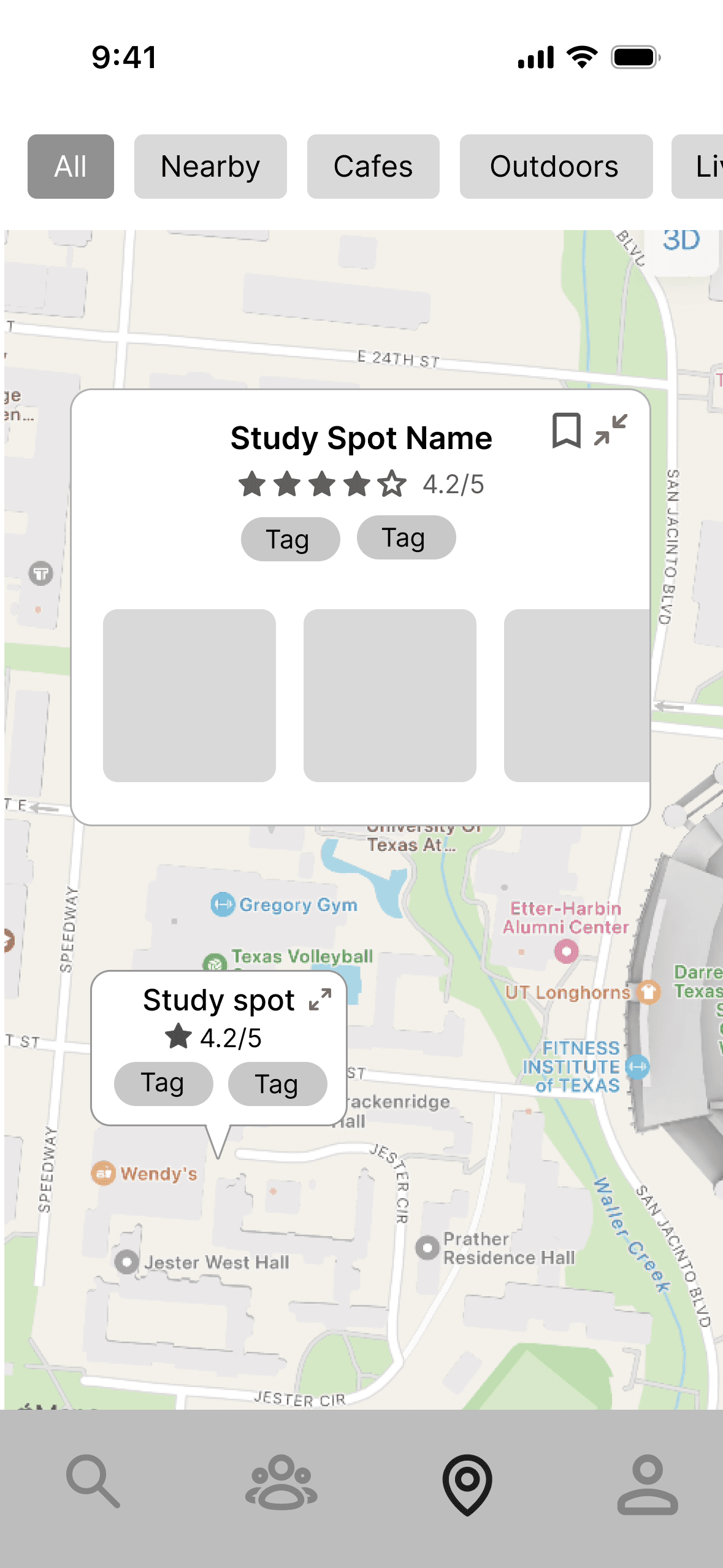
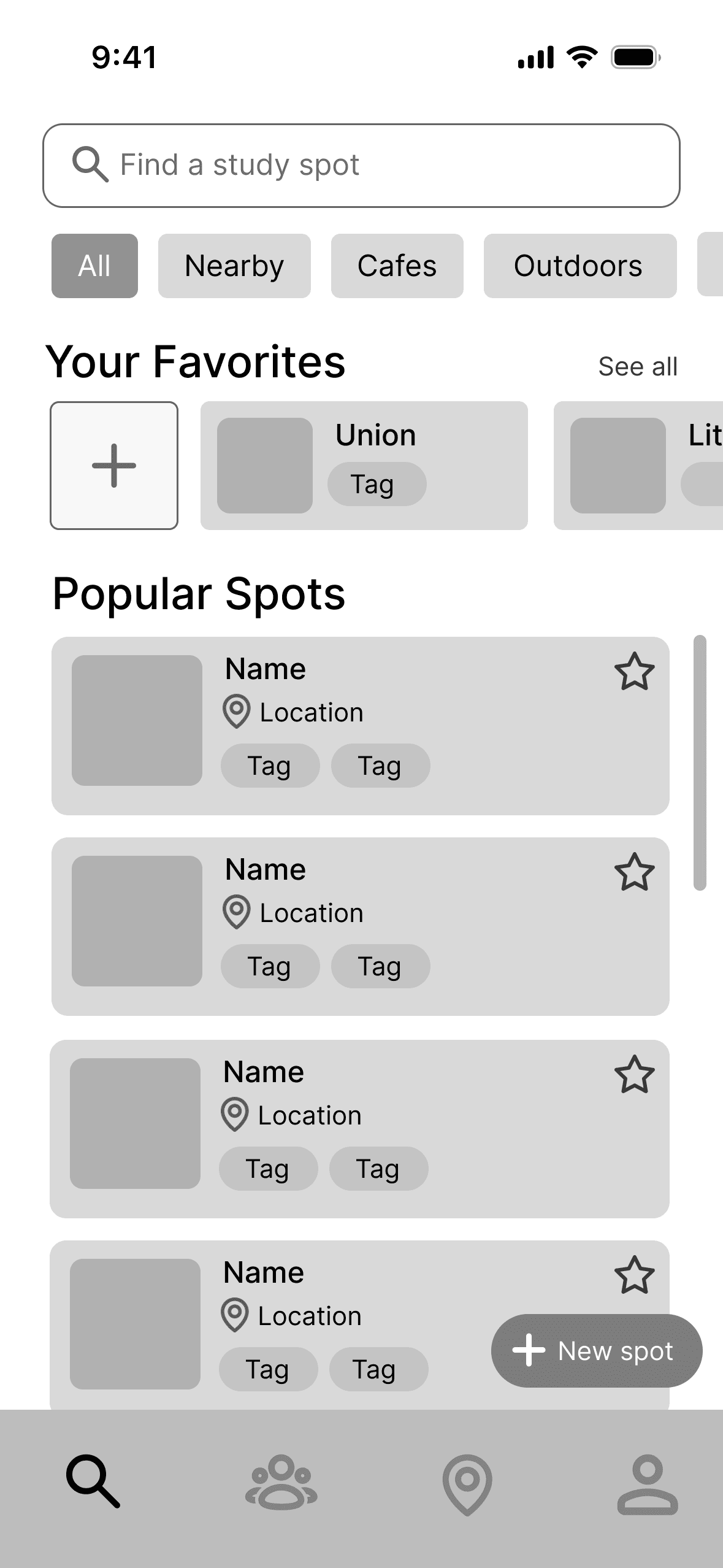
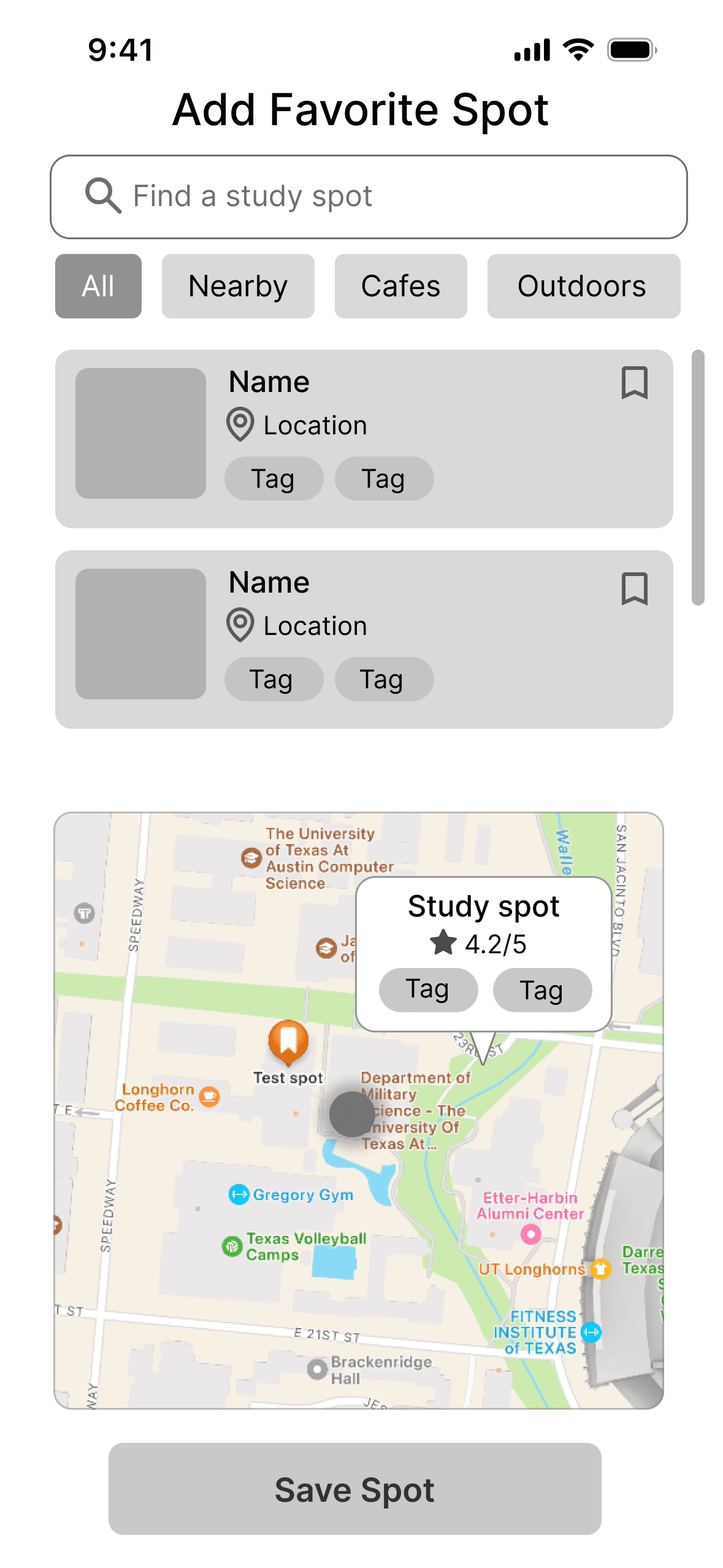
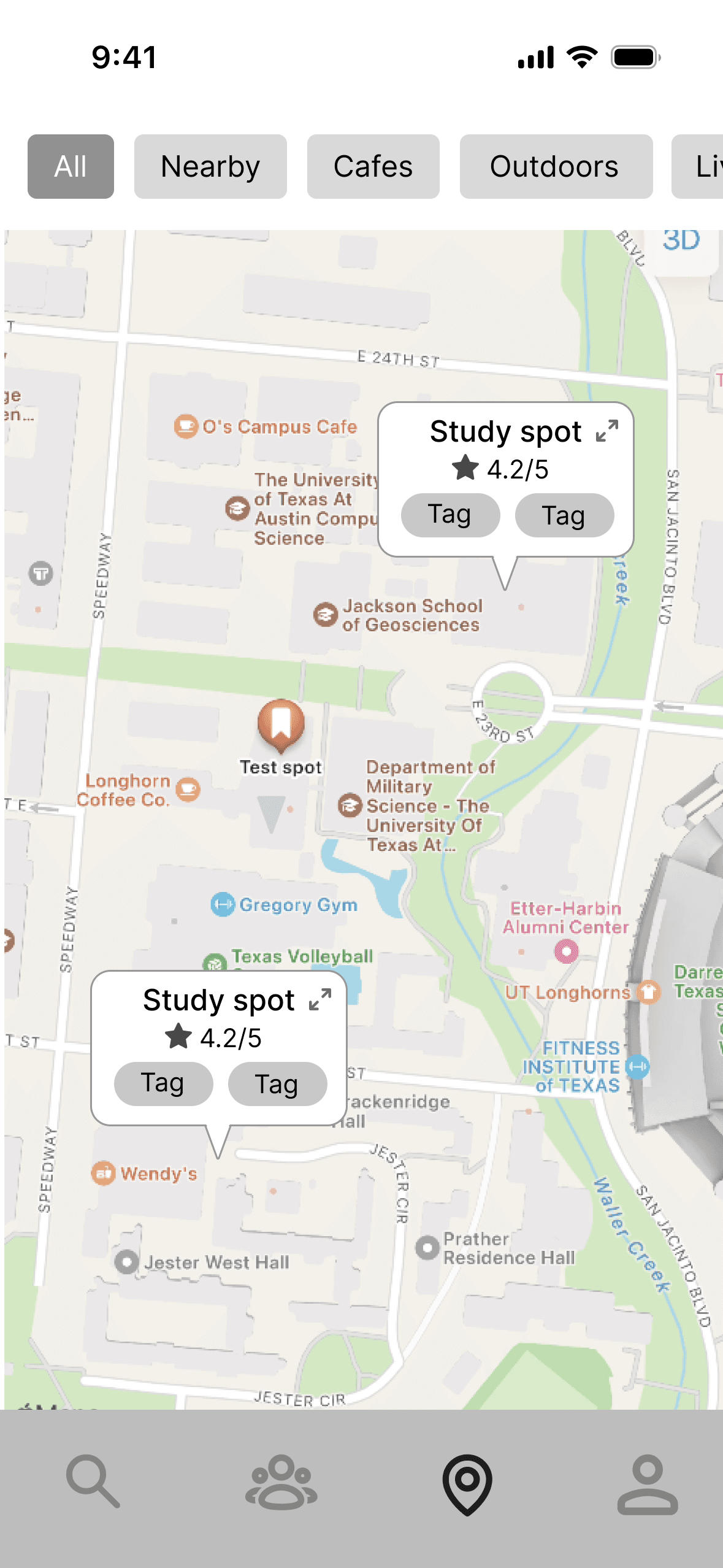
Low to mid fidelity iterations of the home page layout, study spot cards, and map view.
Design decision: Exploring the filter layout
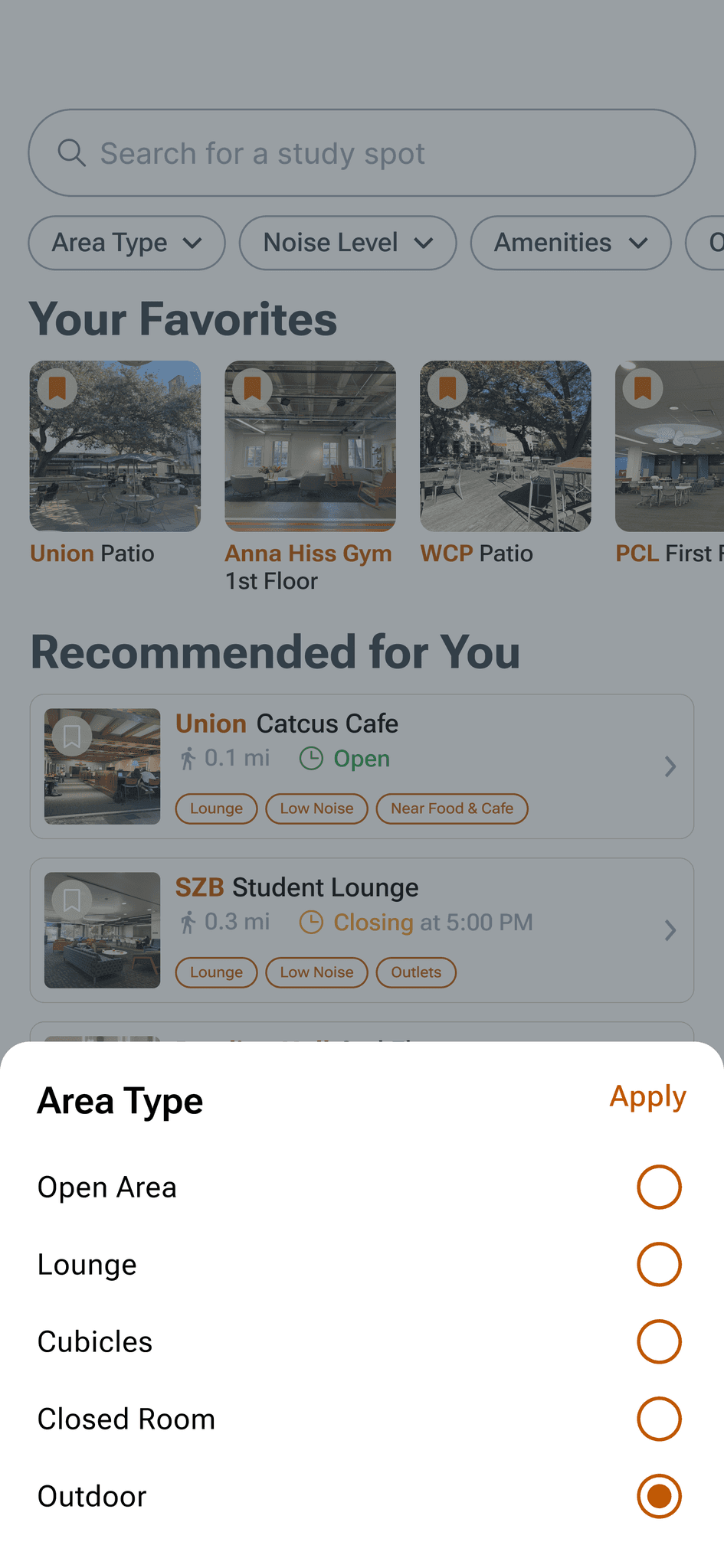
Radio button filter
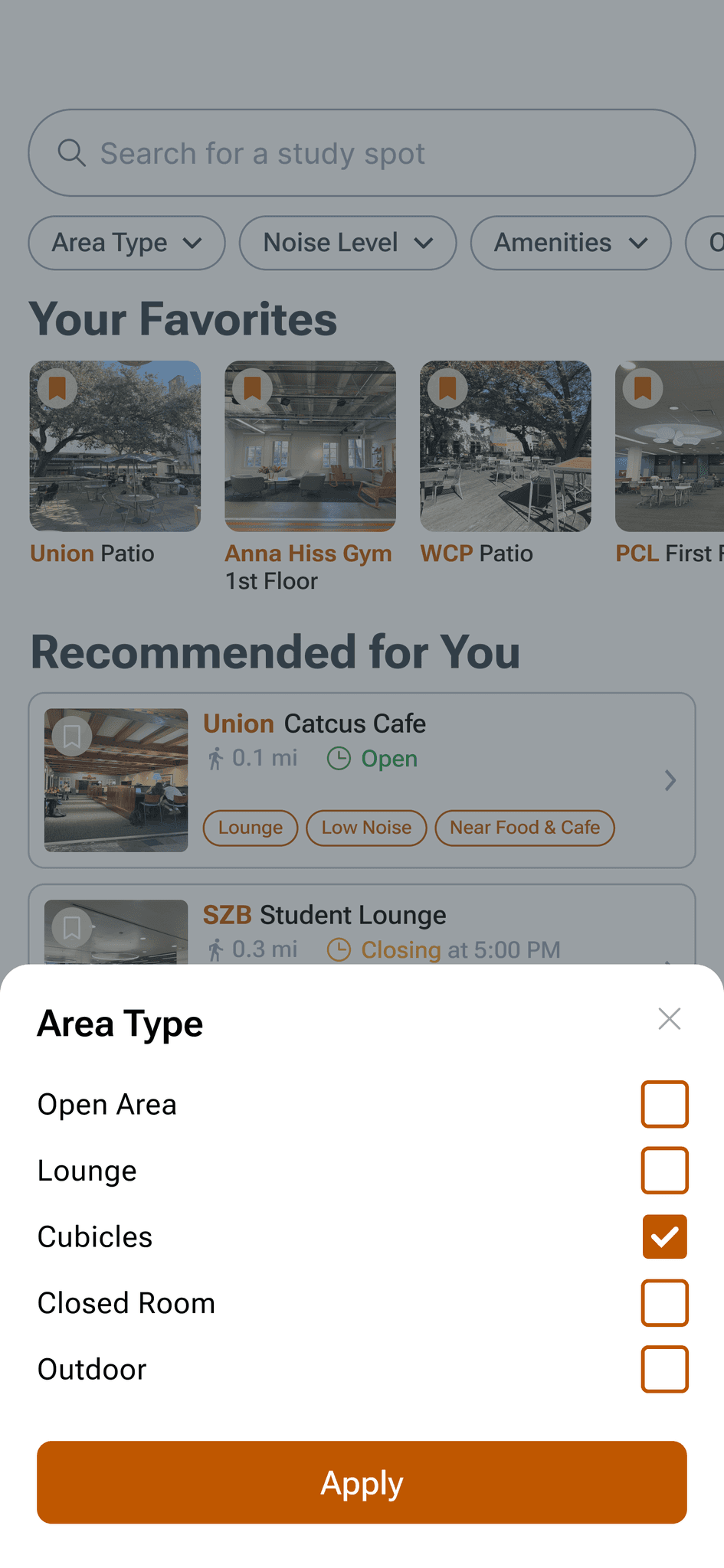
B. Checkbox filter
C. Dropdown filter
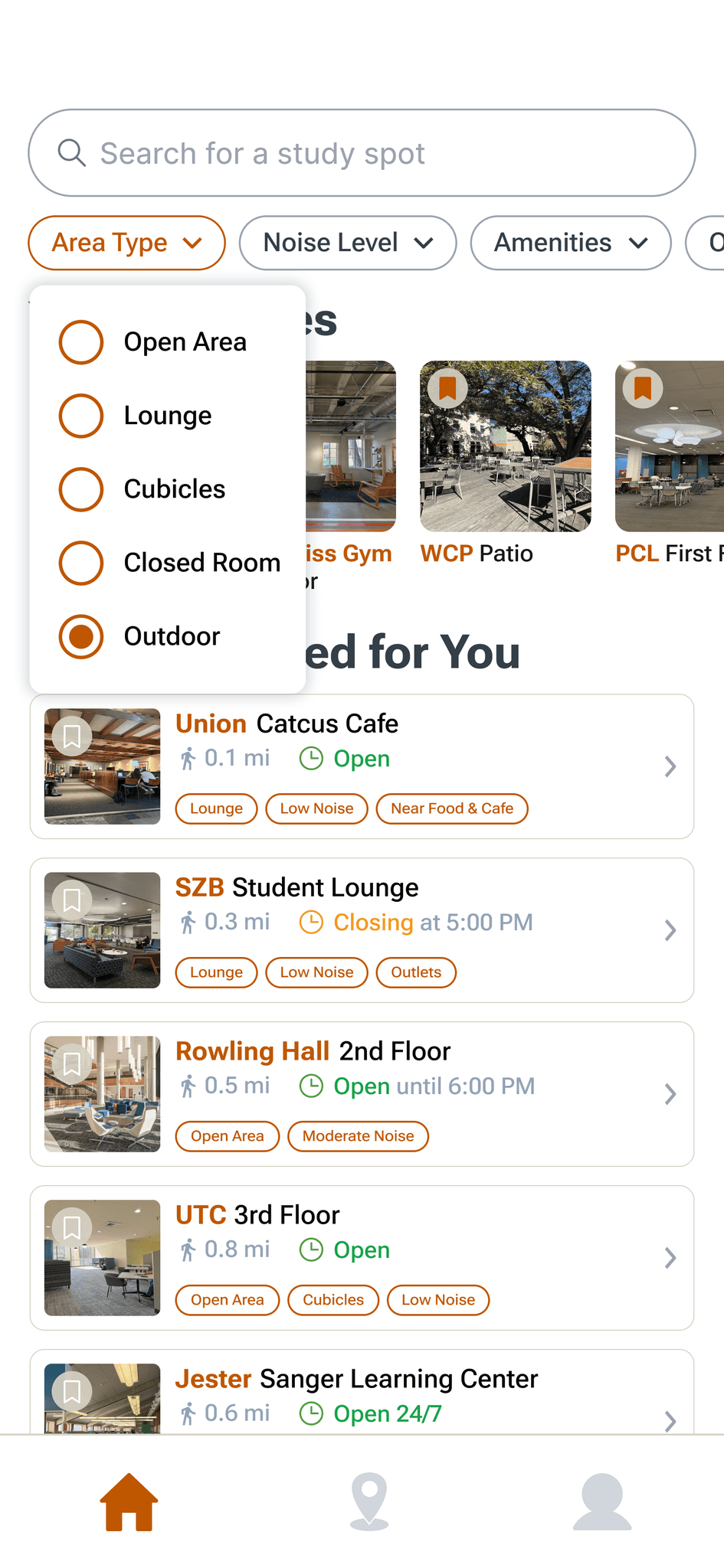
Options A and C aligned more closely with the existing design system by using radio buttons, but option A didn’t clearly communicate multi-select capability, and option C’s dropdown felt too constrained on mobile.
I ultimately chose option B, adapting the system to use checkboxes and repositioning the Apply button as a primary CTA to better signal multi-filter selection. This design was also validated by user testing, as students understood how to select multiple options easily and found their preferences faster.
Design decision: Alternate map pin views
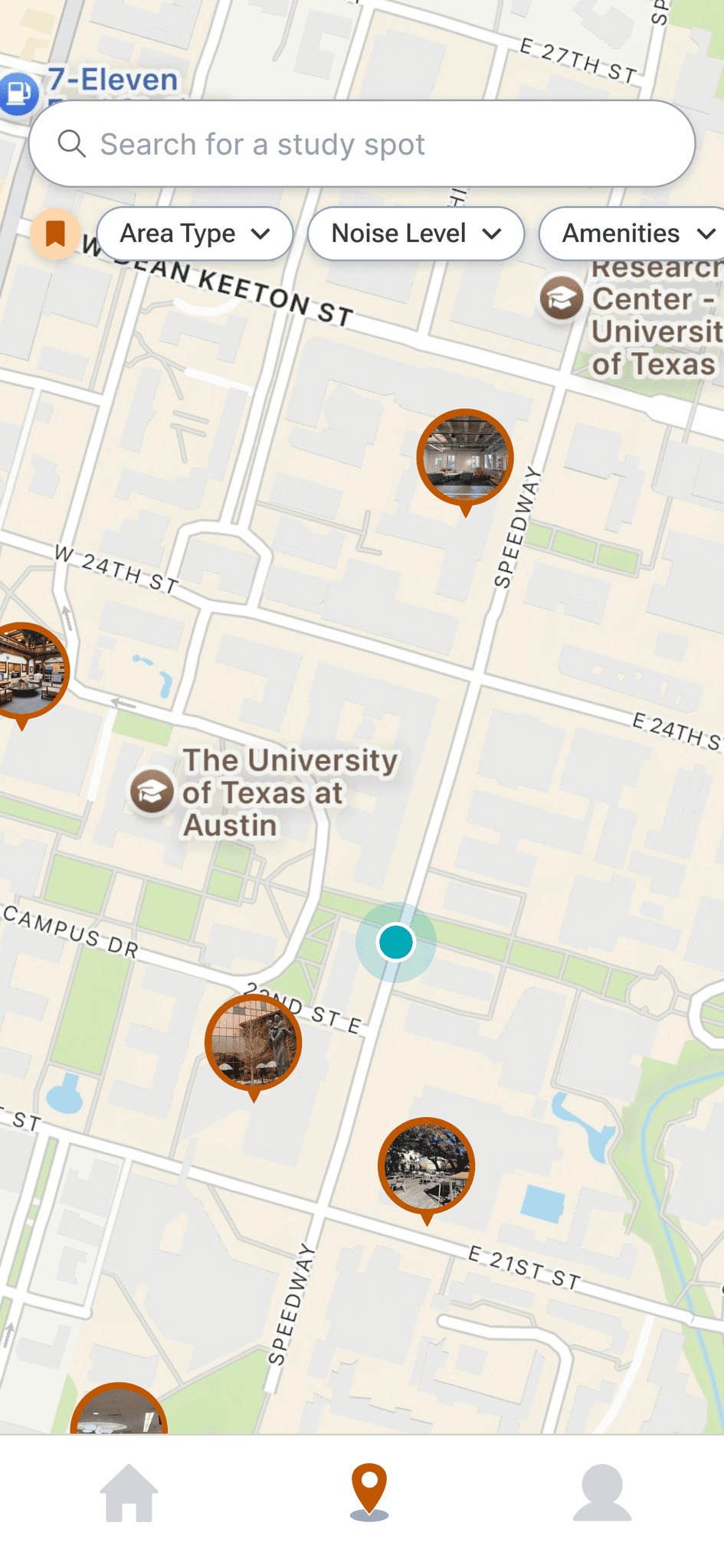
Visual pins
B. Textual pins
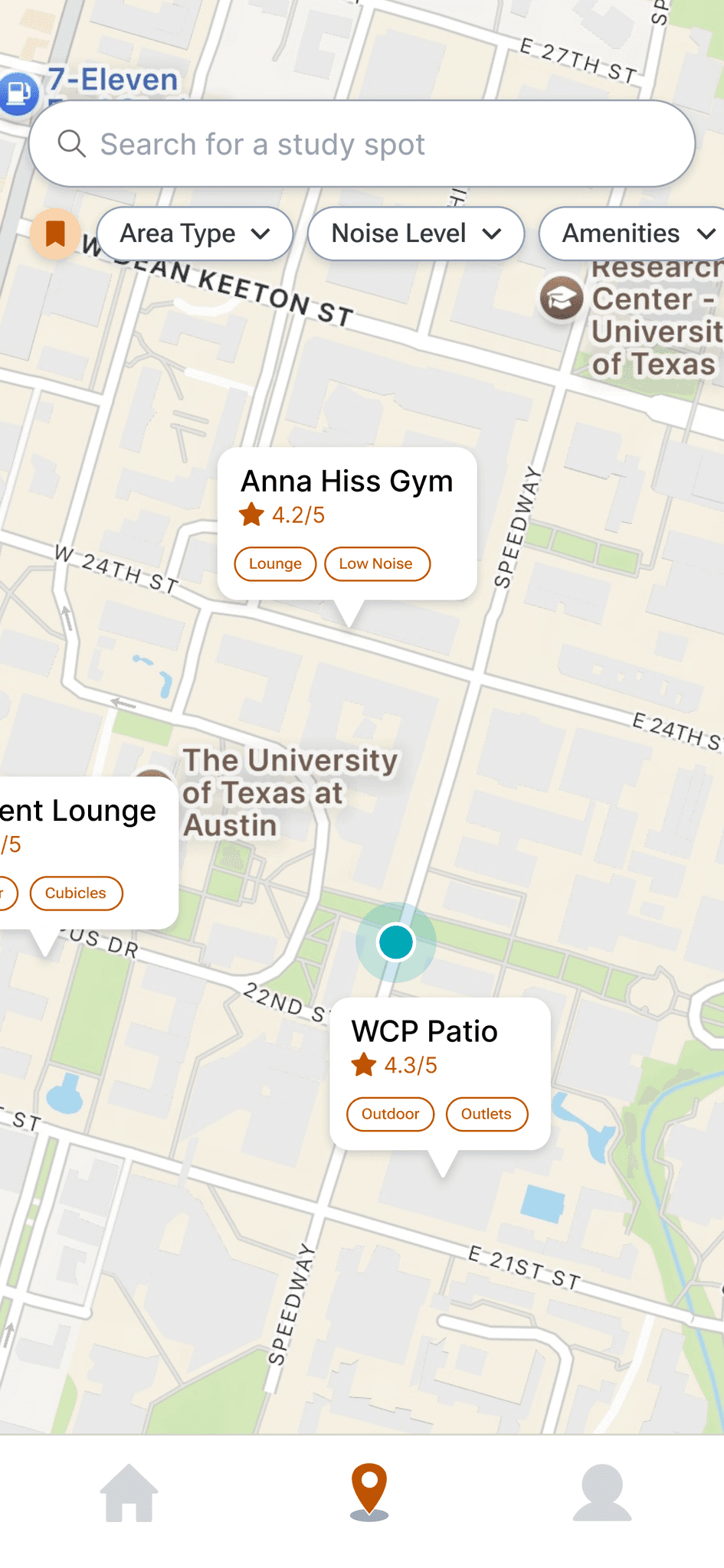
Option B was able to show the study spot tags, but my developers were worried about scalability because when the map view was much more populated, too many textual pins would be overwhelming to view at once.
I went with option A because it simplified the map and would make it easier to see many pins at once. Although I could no longer display the tags, the trade-off was worth it because users cared more about proximity on the map view and could click the icons to get more information during usability tests.
SOLUTION TOUR
Longhorn Studies: A personalized study spot discovery platform
Personalized Study Spot Overview

Enables both personalization with the favorites section and easy study spot discovery with recommendations curated to the user
Study spot cards provide essential info like distance, noise level, amenities and hours in one scroll

Customize Study Spot Search
Users can quickly narrow down study spot options using filters tailored to their environment needs and desired amenities
Map-Based Study Spot Discovery
Easily visualize nearby study spots on a map to prioritize proximity
Displays a compact preview of key information for quick access
LEARNINGS
Growing my team & design skills

Expanding and evolving a design system
Working within a design system taught me how to balance consistency with flexibility. Making strategic design adaptations helped improve usability while preserving the overall visual language.

Communication is key during design to dev hand off
After designing the screens, the next step was bringing them to life. To support a smooth handoff, I learned how to clearly communicate my designs through detailed annotations and documentation.

Leading a team with empathy
Leading other designers helped me grow more confident in my design decisions. I prioritized open communication and constructive feedback to ensure everyone felt heard and empowered.
Next Project
Thrive Education
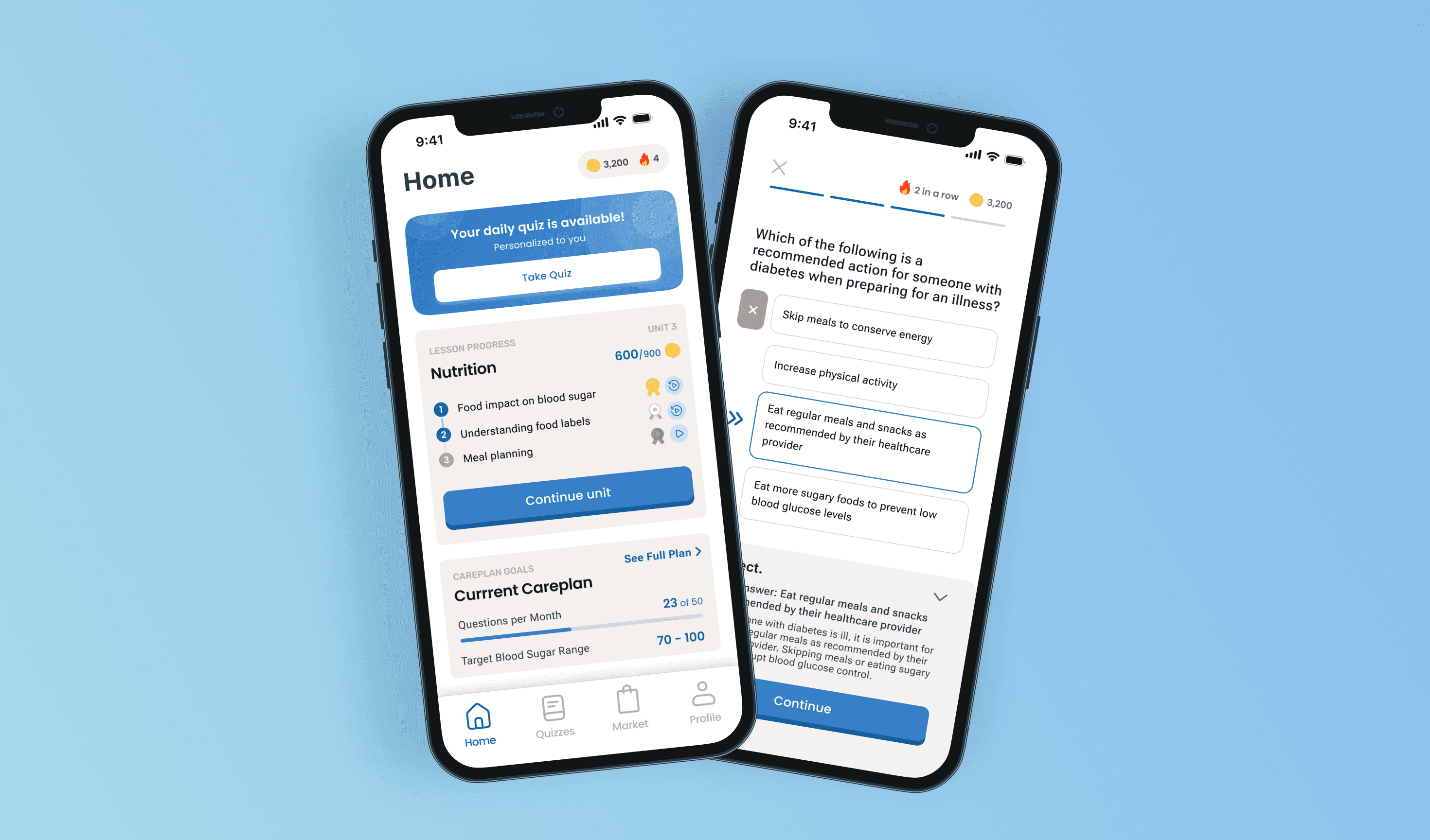
Gamifying diabetes education